This LangChain review examines whether the framework earns its place between your application and its AI models. The strongest reason to adopt it is a reusable agent loop with model integrations, tools, and configurable controls. Its value depends on whether those shared components reduce the code your team must maintain.
My assessment: shortlist LangChain for a model-and-tools application that needs customization. Compare it with direct provider SDKs for simpler features. This documentation-based review was checked on November 10, 2026; it contains no claimed hands-on benchmark or measured performance ranking.
LangChain Review: What You Actually Get
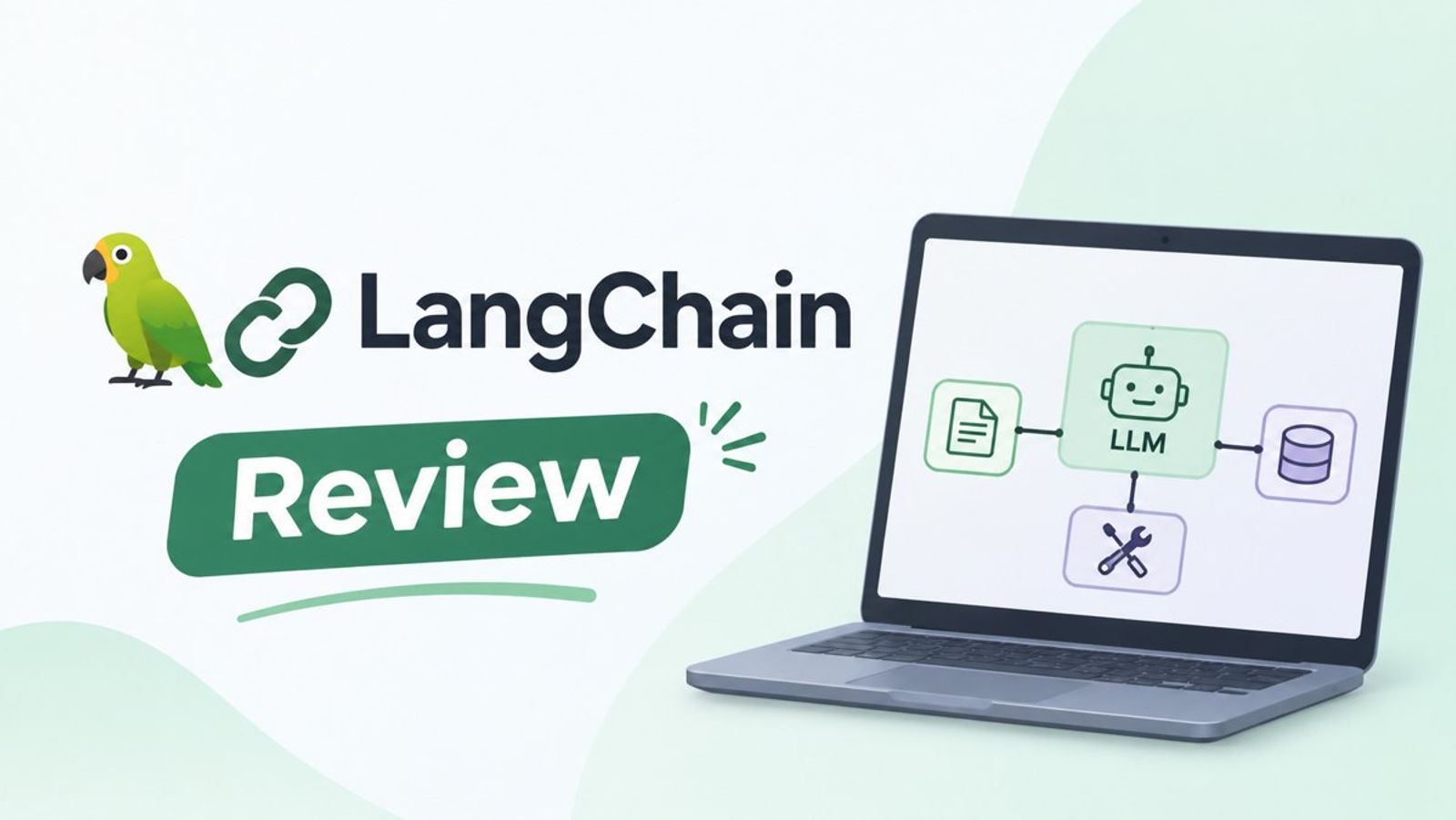
LangChain provides model and tool abstractions plus an agent entry point, create_agent, built on LangGraph. You supply the model, available tools, and instructions. The runtime manages the repeated exchange between model decisions and tool results until the agent finishes or reaches a configured limit.
Three related names describe different responsibilities. LangChain supplies the agent-building interface. LangGraph provides lower-level orchestration. LangSmith adds services for tracing, evaluation, and deployment. Adopting the open-source library does not automatically mean purchasing every hosted service.
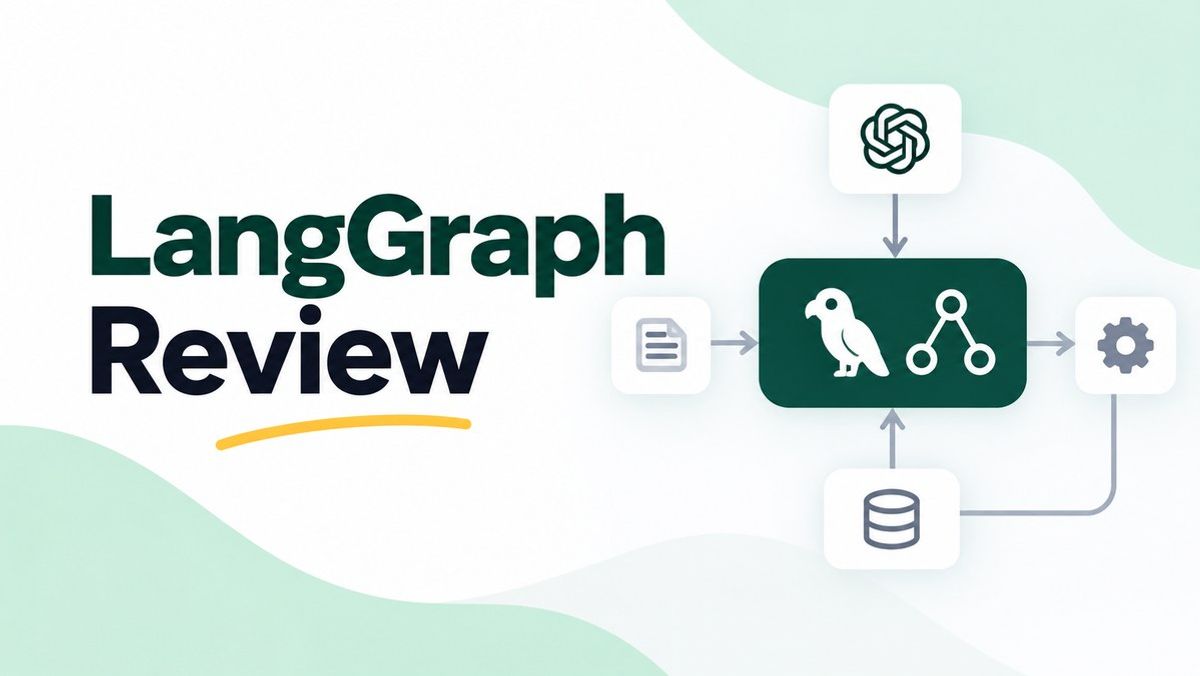
For applications with explicit branches and complex intermediate states, SD's LangGraph review explores the lower-level option. Start with LangChain's standard loop when it fits, then introduce graph-level customization only where your workflow requires it.
The project's repository uses the MIT license. Check integration dependencies and service terms separately. A permissive framework license does not cover model usage, third-party data access, or every component you connect.
Agents and Model Integrations: Useful Abstractions, Real Limits
The model interface lets developers work with multiple providers through shared conventions. That helps when comparing models or maintaining several integrations. It does not make models interchangeable: tool calling, supported parameters, response formats, context limits, and provider-specific features still differ.
Tools expose application functions to the agent. Clear names, descriptions, and input schemas help the model choose and call them. Your code remains responsible for credentials, validation, access control, and handling the external system's response.
Consider a support assistant with account lookup, policy search, and ticket creation. A useful first version retrieves an authorized account, finds the relevant policy, and proposes a ticket. Giving it every administrative function immediately makes evaluation harder and increases the consequences of a wrong decision.
LangChain's abstraction is most valuable when the same patterns recur across features. For a single prompt that returns a summary, direct SDK code may remain easier to read. Count the custom adapters and recovery logic you actually avoid before accepting more dependencies.
Middleware Makes Behavior Easier to Customize
Middleware adds hooks around the agent's model and tool activity. Official documentation describes uses including prompt transformation, logging, retries, fallback behavior, early termination, and sensitive-data handling. These controls let you change the loop without rebuilding it from scratch.
A practical configuration might summarize older messages, cap model calls, and handle a temporary provider error. Each policy needs an explicit failure behavior. A fallback model might respond differently; a retry can add expense; a summary can omit a fact that matters to the next action.
Middleware runs inside the compiled LangGraph returned by create_agent. It is also possible to use that agent inside a larger graph while retaining its hooks. This provides an incremental path from a standard loop to a more customized application.
Treat middleware ordering and interaction as application logic. Test a request that hits more than one policy, such as a tool failure near the call limit. A collection of individually sensible controls can still produce confusing behavior when they act on the same request.
Structured Output, Memory, and Retrieval
Structured output lets an agent return fields your application can consume instead of loosely formatted prose. LangChain supports provider-native and tool-based strategies, with schema validation and a structured response in the final state. The chosen model must support the combination of features you request.
A valid schema does not prove a correct answer. An order number can have the expected type while referring to the wrong customer. Validate important fields against your application records, and keep a clear distinction between extracted evidence and the model's inference.
Short-term memory retains conversation state within a thread. The documentation recommends database-backed checkpointing for production. Plan thread identity, retention, deletion, and authorization alongside storage; remembered context should not become a route to another user's information.
Retrieval supplies external information when needed. LangChain offers document loaders and vector-store integrations, but your team still owns ingestion quality and access filtering. If document processing dominates the project, SD's LlamaIndex review gives you another framework to evaluate against the same corpus.
Use an outdated policy document and two nearly identical customer records in the trial. Check whether the system selects the right source, identifies missing evidence, and refuses to fill gaps with plausible details. A polished answer is insufficient evidence of reliable retrieval.
LangChain Pricing: Separate the Library From the Bill
The open-source library and paid LangSmith services have different cost models. At this review date, LangSmith lists Developer at $0 per seat per month with one seat and 5,000 base traces monthly. Plus lists $39 per seat per month and 10,000 base traces, with usage charges beyond included allowances. Enterprise has custom pricing.
Those figures are a starting point, not an application budget. Model calls, hosting, databases, retrieval infrastructure, and external tools can add separate charges. LangSmith's public pricing also meters individual services, so check the current calculator and your selected deployment before committing.
Estimate costs per completed task, including failed attempts. If a request invokes retrieval, makes several model calls, retries a tool, and triggers an evaluator, the initial user prompt represents only part of the work. Track where usage grows as conversations get longer.
My recommendation is to establish a baseline using one representative workflow. Record total calls, completion rate, reviewer effort, and infrastructure expense. Compare that result with the simpler implementation your team would otherwise maintain. Neither a free library nor a paid platform guarantees a lower total cost.
Approvals, Observability, and the Adoption Test
Human-in-the-loop middleware can pause selected tool calls for review. Current documentation describes approval, argument editing, rejection, and a direct-response decision for question-style tools. Pausing and resuming require checkpointing; production use needs persistent storage rather than a process-local demonstration setup.
Reviewers should see the proposed tool and its actual arguments. A friendly summary is insufficient when the action can send a message, alter an account, or delete a record. Authorization must also be enforced inside the tool, independently of the model's instructions.
SD's AI agent security guide provides broader deployment controls. For a LangChain trial, test a prohibited request, a misleading retrieved instruction, a rejected action, and a restart while approval is pending. Confirm both the visible outcome and the external system's records.
LangSmith traces can help inspect model calls, tool activity, and failures. Its evaluation tools support testing against datasets and collecting feedback. Decide which inputs and outputs may enter telemetry before enabling it on sensitive workloads, and review the selected service's retention settings.
A useful adoption trial should answer three questions:
- Can a developer explain why a failed request took each step?
- Can the application reject unauthorized actions and recover from expected failures?
- Does the framework save enough maintenance work to justify its dependencies and operating costs?
For alternatives, compare the same task with a direct provider SDK, a lower-level graph, or a document-focused framework. Keep model settings and test inputs comparable. Choose the approach your team can inspect and maintain after the demonstration stops being impressive.
Conclusion
This LangChain review finds a strong fit for teams building customizable model-and-tools agents. Its standard loop, integrations, and middleware provide useful starting points, while structured output and tracing can make application behavior easier to inspect.
The decision should rest on a bounded trial: one workflow, representative failures, explicit permissions, and a cost per completed task. Adopt LangChain when it reduces the application code you must own while preserving the control and visibility your users need.
Written by
Iris Chen
Model Research Writer
Iris covers frontier models, open-weight releases, benchmarks, and the practical tradeoffs behind AI infrastructure decisions.
FAQ
Is LangChain free to use?
The open-source library uses the MIT license. Model providers, hosting, external tools, and paid LangSmith services can create separate costs. Evaluate the full application budget.
What is the difference between LangChain and LangGraph?
LangChain supplies a higher-level agent loop and integrations built on LangGraph. LangGraph provides lower-level primitives for customized orchestration and state transitions. You can begin with the higher-level API and customize where needed.
Do you need LangSmith to use LangChain?
LangSmith is a separate service offering tracing, evaluation, and deployment capabilities. It is not required simply to use the open-source LangChain library. Decide whether its operational features fit your application.